<?xml version="1.0" encoding="utf-8"?>
<feed xmlns="http://www.w3.org/2005/Atom">
	<title type="html"><![CDATA[Modartt user forum - Real hammers whip through air. Where's the air in Pianoteq?]]></title>
	<link rel="self" href="https://forum.modartt.com/extern.php?action=feed&amp;tid=908&amp;type=atom"/>
	<updated>2009-12-06T03:01:00Z</updated>
	<generator>PunBB</generator>
	<id>https://forum.modartt.com/viewtopic.php?id=908</id>
		<entry>
			<title type="html"><![CDATA[Re: Real hammers whip through air. Where's the air in Pianoteq?]]></title>
			<link rel="alternate" href="https://forum.modartt.com/viewtopic.php?pid=7577#p7577"/>
			<content type="html"><![CDATA[<div class="quotebox"><cite>Beto-Music wrote:</cite><blockquote><p>I would not be susrprised if someone in this forum came to ask :</p><p>&quot; Have you heard voices saying &#039; KILL&nbsp; KILL&nbsp; KILL &#039;... , after fast damper realise ? &quot;</p></blockquote></div><p><span class="postimg"><img src="http://images.icanhascheezburger.com/completestore/2008/11/4/128703117326560505.jpg" alt="http://images.icanhascheezburger.com/completestore/2008/11/4/128703117326560505.jpg" title="http://images.icanhascheezburger.com/completestore/2008/11/4/128703117326560505.jpg"/></span></p><p>Now back to the subject at hand...</p><p>I think it&#039;s at least important to consider the fact that dampers lifting off the strings set them in motion prior to being hit, and this affects the tone.</p><p>Also, another shortcoming of most MIDI controllers and digital pianos is that you can&#039;t repeat notes without the sustain pedal and float the individual damper over the string. Though Yamaha&#039;s GH3 should be able to pull it off. I&#039;m jus&#039; sayin&#039;, since the discussion has evolved into dampers lifting off the strings and how that affects the tone. It&#039;s not unreasonable to anticipate advancements in controllers as Pianoteq and the like continue to trailblaze.</p>]]></content>
			<author>
				<name><![CDATA[moshuajusic]]></name>
				<uri>https://forum.modartt.com/profile.php?id=801</uri>
			</author>
			<updated>2009-12-06T03:01:00Z</updated>
			<id>https://forum.modartt.com/viewtopic.php?pid=7577#p7577</id>
		</entry>
		<entry>
			<title type="html"><![CDATA[Re: Real hammers whip through air. Where's the air in Pianoteq?]]></title>
			<link rel="alternate" href="https://forum.modartt.com/viewtopic.php?pid=7573#p7573"/>
			<content type="html"><![CDATA[<p>I would not be susrprised if someone in this forum came to ask :</p><p>&quot; Have you heard voices saying &#039; KILL&nbsp; KILL&nbsp; KILL &#039;... , after fast damper realise ? &quot;</p>]]></content>
			<author>
				<name><![CDATA[Beto-Music]]></name>
				<uri>https://forum.modartt.com/profile.php?id=8</uri>
			</author>
			<updated>2009-12-06T00:09:21Z</updated>
			<id>https://forum.modartt.com/viewtopic.php?pid=7573#p7573</id>
		</entry>
		<entry>
			<title type="html"><![CDATA[Re: Real hammers whip through air. Where's the air in Pianoteq?]]></title>
			<link rel="alternate" href="https://forum.modartt.com/viewtopic.php?pid=7568#p7568"/>
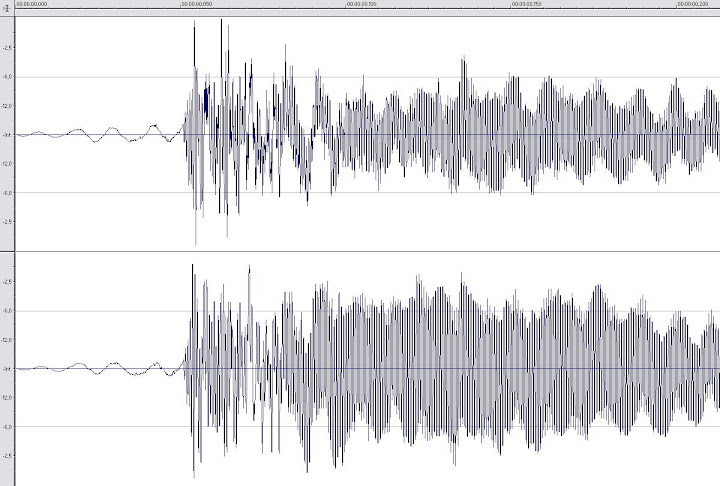
			<content type="html"><![CDATA[<p>Yes, the reason I didn&#039;t see it when the midi file is played by Pianoteq is that the sustain pedal Ctrl event comes AFTER the first note in the file. I edited the file to put it approximately 30-40 ms before, and here is what I get when the file is played by C3 Short Treble, with the sustain pedal noise boosted to its maximum :</p><p><span class="postimg"><img src="http://lh4.ggpht.com/_TjduP84EQE0/SxqbHrZnWtI/AAAAAAAABxg/ksK2JKgOwLg/s720/Marteau%20C3%20Short%20Treble.jpg" alt="http://lh4.ggpht.com/_TjduP84EQE0/SxqbHrZnWtI/AAAAAAAABxg/ksK2JKgOwLg/s720/Marteau%20C3%20Short%20Treble.jpg" title="http://lh4.ggpht.com/_TjduP84EQE0/SxqbHrZnWtI/AAAAAAAABxg/ksK2JKgOwLg/s720/Marteau%20C3%20Short%20Treble.jpg"/></span></p>]]></content>
			<author>
				<name><![CDATA[Gilles]]></name>
				<uri>https://forum.modartt.com/profile.php?id=657</uri>
			</author>
			<updated>2009-12-05T17:49:15Z</updated>
			<id>https://forum.modartt.com/viewtopic.php?pid=7568#p7568</id>
		</entry>
		<entry>
			<title type="html"><![CDATA[Re: Real hammers whip through air. Where's the air in Pianoteq?]]></title>
			<link rel="alternate" href="https://forum.modartt.com/viewtopic.php?pid=7566#p7566"/>
			<content type="html"><![CDATA[<p>Interesting. I guess that the fact that the sample is so short explains why we didn&#039;t recognize it for what it was.</p>]]></content>
			<author>
				<name><![CDATA[Philippe Guillaume]]></name>
				<uri>https://forum.modartt.com/profile.php?id=5</uri>
			</author>
			<updated>2009-12-05T17:15:38Z</updated>
			<id>https://forum.modartt.com/viewtopic.php?pid=7566#p7566</id>
		</entry>
		<entry>
			<title type="html"><![CDATA[Re: Real hammers whip through air. Where's the air in Pianoteq?]]></title>
			<link rel="alternate" href="https://forum.modartt.com/viewtopic.php?pid=7565#p7565"/>
			<content type="html"><![CDATA[<div class="quotebox"><cite>guillaume wrote:</cite><blockquote><p>I&#039;m not sure that the noise in the above sample comes from the damper: the wave form shows quite a low frequency noise (around 200 Hz) which is not compatible with the note which is played (an F at 1400 Hz). Maybe the stroke on the key?</p><p>Edit: Jake, that makes me think at the excellent Askenfelt lectures, for example<br /><a href="http://www.speech.kth.se/music/5_lectures/askenflt/measure.html">http://www.speech.kth.se/music/5_lectur...asure.html</a><br />that you mentioned once in the thread<br /><a href="http://www.forum-pianoteq.com/viewtopic.php?id=471">http://www.forum-pianoteq.com/viewtopic.php?id=471</a></p></blockquote></div><p>In fact, Pianoteq already has that sound...I recorded the sustain pedal noise in the Pianoteq Action effects panel, and the first 30 ms sound exactly like my uploaded sound bit! Sorry to have bothered everybody with this, it&#039;s only the pianist pressing the sustain pedal at the beginning of the piece, an effect we already have with Pianoteq! <i class="far fa-meh-rolling-eyes smiley"></i></p><p>Pretty good microphones though...</p>]]></content>
			<author>
				<name><![CDATA[Gilles]]></name>
				<uri>https://forum.modartt.com/profile.php?id=657</uri>
			</author>
			<updated>2009-12-05T15:48:53Z</updated>
			<id>https://forum.modartt.com/viewtopic.php?pid=7565#p7565</id>
		</entry>
		<entry>
			<title type="html"><![CDATA[Re: Real hammers whip through air. Where's the air in Pianoteq?]]></title>
			<link rel="alternate" href="https://forum.modartt.com/viewtopic.php?pid=7564#p7564"/>
			<content type="html"><![CDATA[<p>Yes the audience I perform for also were getting together petitions to add the Hammer/Wind Noise to the Pro version......Please.<br />I do agree about the vacuum though, but there&#039;s these Phenominal plugs from Brainrox that use M/S techniques to fool chumps into believing their sample library has 12 different mic positions bathed in crappy reverb.<br />A good M/S plug for VST should also be available, I am not sure, but they seem to have copies of every other DSP plug so check around. It will fix any &quot; Vacummed &quot; preset to sound close mic&#039;d. I agree about the overall sound too, but try the plug I mentioned for whatever platform you use AU/VST/RTAS and then widen it, and move it in closer.<br />I found the sound to enhance to where I know a real Piano on a wooden stage would sound. Modartt does have that carpeted, enclosed rehersal room sound of a boring College that has a couple of Pianos and no metronomes...But at least it&#039;s accurate through the velocity curve .</p><p>Cheers.</p>]]></content>
			<author>
				<name><![CDATA[teamsterjim]]></name>
				<uri>https://forum.modartt.com/profile.php?id=786</uri>
			</author>
			<updated>2009-12-05T13:28:46Z</updated>
			<id>https://forum.modartt.com/viewtopic.php?pid=7564#p7564</id>
		</entry>
		<entry>
			<title type="html"><![CDATA[Re: Real hammers whip through air. Where's the air in Pianoteq?]]></title>
			<link rel="alternate" href="https://forum.modartt.com/viewtopic.php?pid=7557#p7557"/>
			<content type="html"><![CDATA[<div class="quotebox"><cite>joshuasethcomposer wrote:</cite><blockquote><p>.... I believe &quot;hammer noise&quot; should include the noise the hammers make as they whip through the air. The harder you strike the keys, the more prominent that sound. I&#039;m sure you know what I&#039;m talking about--that acute, subtle whoosh of air you hear at the very beginning of hard strikes on a real piano. Sampled pianos capture this essential element of the experience. You should, too!</p></blockquote></div><p>Hello Joshua,</p><p>I just encountered this thread in the forum and have not read all of the replies, but would like to discuss the notion of &quot;whooshing air&quot; that you describe, as hammers approach the strings.</p><p>I strongly suspect the sound you hear is not due to air turbulence caused by hammers.&nbsp; Why not?&nbsp; the hammer head has to accelerate from a standing start through a distance of no more than about 2-3 inches, in the time of approximately one-fifth to one-tenth of a second.&nbsp; Even if the acceleration was nearly instantaneous, we are only talking of about a terminal velocity of 30 inches per second (3&quot; divided by 0.1 seconds).</p><p>If you realize that 60 mph is a mile in a minute, or 5280 feet in 60 seconds, or 88 feet in one second, then consider that 2-1/2 feet per second is only about 3 miles per hour -- hardly enough speed to cause air turbulence -- especially in something with as small a cross section as the leading edge of a piano hammer.&nbsp; So the average velocity is 30&quot; per second, and from a standing start, the final speed at impact might only be 5 to 10 miles per hour -- there is neither enough time, nor distance, nor surface area to cause a whooshing sound.</p><p>More to the point, please note that if you swing your arm through the air as fast as you can, even with fingers outstretched, you are moving far more air than would be moved by the above mentioned hammers.&nbsp; Do you hear whooshing sounds when you wave your arms with fingers outstretched (to move the maximum amount of air possible)? The obvious answer is &#039;No&#039;.&nbsp; In the case of the swinging arm, a major league baseball player can accelerate his hand from 0 to over 90 mph in approximately 1/3rd of a second -- but there is no whoosh from air turbulence from even a professional major league baseball players arm or hand.</p><p>On the other hand, when Tiger Woods swings a golf club (or his wife swings one into his face), the whoosh you hear is NOT due to the air, per se, but rather to the resonance of the flexing golf club shank as it slices through the air.&nbsp; </p><p>So, what are we hearing instead?&nbsp; Many times, grand pianos emit whooshing sounds (actually I prefer to call it a &quot;hissing&quot; sound) when the sustain pedal is depressed, and the dampers collectively leave the strings at the same time.&nbsp; This occurs when the dampers are slightly misaligned when they rest on the string after the previous time they were lifted (by depressing a given note or hitting the sustain pedal).&nbsp; When they are lifted by the sustain pedal, the slight misalignment can tend to excite the higher harmonics inherent in all strings, but especially of the low and midrange strings.</p><p>Now that particular hissing sound can be emulated in Pianoteq by increasing the sustain pedal noise and hammer noise.</p><p>I hope this clarified what you were experiencing.</p><p>Cheers,</p><p>Joe</p>]]></content>
			<author>
				<name><![CDATA[jcfelice88keys]]></name>
				<uri>https://forum.modartt.com/profile.php?id=734</uri>
			</author>
			<updated>2009-12-05T09:14:56Z</updated>
			<id>https://forum.modartt.com/viewtopic.php?pid=7557#p7557</id>
		</entry>
		<entry>
			<title type="html"><![CDATA[Re: Real hammers whip through air. Where's the air in Pianoteq?]]></title>
			<link rel="alternate" href="https://forum.modartt.com/viewtopic.php?pid=7555#p7555"/>
			<content type="html"><![CDATA[<div class="quotebox"><cite>skip wrote:</cite><blockquote><p>Here&#039;s an interesting article on some research into a continuous keyboard controller:</p><p><a href="http://cnmat.berkeley.edu/system/files/attachments/New+Music+Keyboard.pdf">http://cnmat.berkeley.edu/system/files/...yboard.pdf</a></p><p>Greg.</p></blockquote></div><p>-, I hate it when I have a great idea, only to find out that someone else already thought of it. <i class="far fa-meh-rolling-eyes smiley"></i></p>]]></content>
			<author>
				<name><![CDATA[moshuajusic]]></name>
				<uri>https://forum.modartt.com/profile.php?id=801</uri>
			</author>
			<updated>2009-12-05T04:58:56Z</updated>
			<id>https://forum.modartt.com/viewtopic.php?pid=7555#p7555</id>
		</entry>
		<entry>
			<title type="html"><![CDATA[Re: Real hammers whip through air. Where's the air in Pianoteq?]]></title>
			<link rel="alternate" href="https://forum.modartt.com/viewtopic.php?pid=7550#p7550"/>
			<content type="html"><![CDATA[<p>Here&#039;s an interesting article on some research into a continuous keyboard controller:</p><p><a href="http://cnmat.berkeley.edu/system/files/attachments/New+Music+Keyboard.pdf">http://cnmat.berkeley.edu/system/files/...yboard.pdf</a></p><p>Greg.</p>]]></content>
			<author>
				<name><![CDATA[skip]]></name>
				<uri>https://forum.modartt.com/profile.php?id=353</uri>
			</author>
			<updated>2009-12-05T00:50:28Z</updated>
			<id>https://forum.modartt.com/viewtopic.php?pid=7550#p7550</id>
		</entry>
		<entry>
			<title type="html"><![CDATA[Re: Real hammers whip through air. Where's the air in Pianoteq?]]></title>
			<link rel="alternate" href="https://forum.modartt.com/viewtopic.php?pid=7549#p7549"/>
			<content type="html"><![CDATA[<p>Jake,<br />I agree - if it&#039;s just a millisecond or so of sound that is desired, then that doesn&#039;t introduce an objectionable latency. </p><p>The point I&#039;m trying to make is that if we end up really wanting more pre-hammer-strike duration, then I think it is technically possible, with the right programming and the right controller. </p><p>Question: Do the very high end digital pianos, that do sense the position of the keys in a continuous manner, make the data available externally? Or, is it all internal processing, with only standard note-on/note-off style information available externally?</p><p>Greg.</p>]]></content>
			<author>
				<name><![CDATA[skip]]></name>
				<uri>https://forum.modartt.com/profile.php?id=353</uri>
			</author>
			<updated>2009-12-05T00:14:10Z</updated>
			<id>https://forum.modartt.com/viewtopic.php?pid=7549#p7549</id>
		</entry>
		<entry>
			<title type="html"><![CDATA[Re: Real hammers whip through air. Where's the air in Pianoteq?]]></title>
			<link rel="alternate" href="https://forum.modartt.com/viewtopic.php?pid=7547#p7547"/>
			<content type="html"><![CDATA[<p>When I maximize the note (0 dB), the noise before the note is at about -26.4 and -29.2 dB left/right respectively.</p><p>It&#039;s sound is very similar to the noise my DP keybed makes when the speakers are turned off - more of a dull thud than a whoosh.&nbsp; And I&#039;m quite sure it&#039;s not dampers activating the strings.</p><p>Once when I still had my grand, I pulled the action out, and struck a key (the&nbsp; hammer flew up of course), and when the key bottomed out on the keybed, it made a dull thudding noise.</p><p>At -26dB, it&#039;s not a very prominent part of the sound.&nbsp; This tends to confirm that Steinways are well built - as they&#039;ve managed to almost eliminate this non-musical sound (apparently Pianoteq has completely managed).</p><p>Glenn</p>]]></content>
			<author>
				<name><![CDATA[Glenn NK]]></name>
				<uri>https://forum.modartt.com/profile.php?id=750</uri>
			</author>
			<updated>2009-12-04T22:08:59Z</updated>
			<id>https://forum.modartt.com/viewtopic.php?pid=7547#p7547</id>
		</entry>
		<entry>
			<title type="html"><![CDATA[Re: Real hammers whip through air. Where's the air in Pianoteq?]]></title>
			<link rel="alternate" href="https://forum.modartt.com/viewtopic.php?pid=7539#p7539"/>
			<content type="html"><![CDATA[<p>I&#039;m not sure that the noise in the above sample comes from the damper: the wave form shows quite a low frequency noise (around 200 Hz) which is not compatible with the note which is played (an F at 1400 Hz). Maybe the stroke on the key?</p><p>Edit: Jake, that makes me think at the excellent Askenfelt lectures, for example<br /><a href="http://www.speech.kth.se/music/5_lectures/askenflt/measure.html">http://www.speech.kth.se/music/5_lectur...asure.html</a><br />that you mentioned once in the thread<br /><a href="http://www.forum-pianoteq.com/viewtopic.php?id=471">http://www.forum-pianoteq.com/viewtopic.php?id=471</a></p>]]></content>
			<author>
				<name><![CDATA[Philippe Guillaume]]></name>
				<uri>https://forum.modartt.com/profile.php?id=5</uri>
			</author>
			<updated>2009-12-04T21:10:00Z</updated>
			<id>https://forum.modartt.com/viewtopic.php?pid=7539#p7539</id>
		</entry>
		<entry>
			<title type="html"><![CDATA[Re: Real hammers whip through air. Where's the air in Pianoteq?]]></title>
			<link rel="alternate" href="https://forum.modartt.com/viewtopic.php?pid=7537#p7537"/>
			<content type="html"><![CDATA[<p>Skip, I&#039;m sounding confused because I suspect that there are several initial soft sounds that are almost indistinguishable--perhaps some air, the movement of the damper and the key, etc.</p><p>Listening to the posted mp3, to the very few milliseconds just before the definite sound of the hammer whacking the string\the key hitting the keybed, I do hear a ramping up of a soft sound. Sorry to dwell on this sound immediately prior to the clack, but it would be magnified when playing several notes at once, and even if not, we do know from working with sampled pianos that very small differences in the attack make a large difference in the sound. A millisecond too short or long makes it too suddenly bright or turns it into a violin...</p><p>What I&#039;m saying, I think, is that I understand that it would be impractical to try to include all of the soft sound prior to the attack, most of which is inaudible, but a millisecond or so of soft sound at the start of the attack, when that soft sound is most audible, according to the recording, might be worth exploring. (Might, might...)</p>]]></content>
			<author>
				<name><![CDATA[Jake Johnson]]></name>
				<uri>https://forum.modartt.com/profile.php?id=11</uri>
			</author>
			<updated>2009-12-04T20:37:31Z</updated>
			<id>https://forum.modartt.com/viewtopic.php?pid=7537#p7537</id>
		</entry>
		<entry>
			<title type="html"><![CDATA[Re: Real hammers whip through air. Where's the air in Pianoteq?]]></title>
			<link rel="alternate" href="https://forum.modartt.com/viewtopic.php?pid=7536#p7536"/>
			<content type="html"><![CDATA[<p>Jake,<br />Regarding the &quot;latency&quot; of a real piano, remember that the hammer on a real piano begins to move smoothly as soon as you start pressing down on the key. (right?)</p><p>This is why I have said repeatedly, now, that pre hammer strike sounds COULD be done in Pianoteq, if it supported CONTINUOUS CONTROLLERS. I.e - Pianoteq could detect the initial acceleration, and start generating the sounds almost immediately. (and I see that Enigmahack is thinking along the same lines)</p><p>Greg.</p>]]></content>
			<author>
				<name><![CDATA[skip]]></name>
				<uri>https://forum.modartt.com/profile.php?id=353</uri>
			</author>
			<updated>2009-12-04T20:35:55Z</updated>
			<id>https://forum.modartt.com/viewtopic.php?pid=7536#p7536</id>
		</entry>
		<entry>
			<title type="html"><![CDATA[Re: Real hammers whip through air. Where's the air in Pianoteq?]]></title>
			<link rel="alternate" href="https://forum.modartt.com/viewtopic.php?pid=7534#p7534"/>
			<content type="html"><![CDATA[<p>I was thinking about this as well, and I realize that I&#039;m sure it could be implemented (if it hasn&#039;t already been) for when you depress the sustain pedal, but when it comes to each individual damper lifting with each depressing key... that would take a very special type of midi message/keyboard. </p><p>In the same way most synths/midi controllers have aftertouch, they would also require a pre-touch of sorts that would measure the height of the key. As you depress the key, it would effectively &quot;lift the damper&quot; based on the amount of key press you push down. </p><p>Now this causes a few problems:<br />1 - What midi channel would this go over? (custom obviously)<br />2 - What midi controller supports this?<br />3 - If we choose to ignore this, the only way to effectively recreate it is to add latency which takes away from the playability of the instrument itself. </p><br /><p>Anyway - I do agree that this classic whooshing sound is definitely the dampers being lifted from the strings. My question is - is this already included from when you depress the sustain pedal? Do you hear any noise at all when you only press down on the damper pedal? </p><p>As other posters have mentioned as well: There is obviously more work that needs to be done with Pianoteq. I think they have a fantastic product and are definitely working in the right direction but as some people have mentioned... there&#039;s something that still just doesn&#039;t sound right sometimes in the higher registers (for me anyway). I can&#039;t pinpoint it, but it sounds too perfect? </p><p>That being said - they&#039;re obviously heading in the right direction, and I think they should perfect the piano part of the sound before worrying about individual nuances that our midi controllers don&#039;t support <i class="far fa-smile smiley"></i></p><p>Just my 2c.</p>]]></content>
			<author>
				<name><![CDATA[enigmahack]]></name>
				<uri>https://forum.modartt.com/profile.php?id=1178</uri>
			</author>
			<updated>2009-12-04T20:03:25Z</updated>
			<id>https://forum.modartt.com/viewtopic.php?pid=7534#p7534</id>
		</entry>
</feed>